
Passive Fire Protection for UK Schools
Peace of mind for schools
Best Passive Fire Protection for Schools
Schools must select passive fire protection that protects students and staff with certified solutions. Educational buildings are used intensively daily and therefore require robust fire compartmentation. School governors and local authorities should therefore focus on proven fire-stopping systems, cavity barriers and fire-rated doors. At Meritas, we deliver engineered passive fire protection systems designed specifically for modern UK school premises.
The best passive fire protection for schools combines certified structural fire stopping, timber fire doors, and cavity barriers. These integrated systems thus contain heat and smoke within designated areas and provide for safe evacuation. Extensive fire protection prevents structural damage from becoming catastrophic during emergency events.








Key Features of Superior Passive Fire Protection for Schools
Schools in the UK have to comply very strictly with building and safety regulations, including the 2005 RRFSO (Regulatory Reform Fire Safety Order), the Approved Document B and Building Bulletin 100 (BB100) guidelines. But standard compliance doesn’t always consider vulnerable service penetrations created during routine plumbing, electrical and IT upgrades.
As such, Meritas offers specialised passive fire protection that permanently seals structural openings.
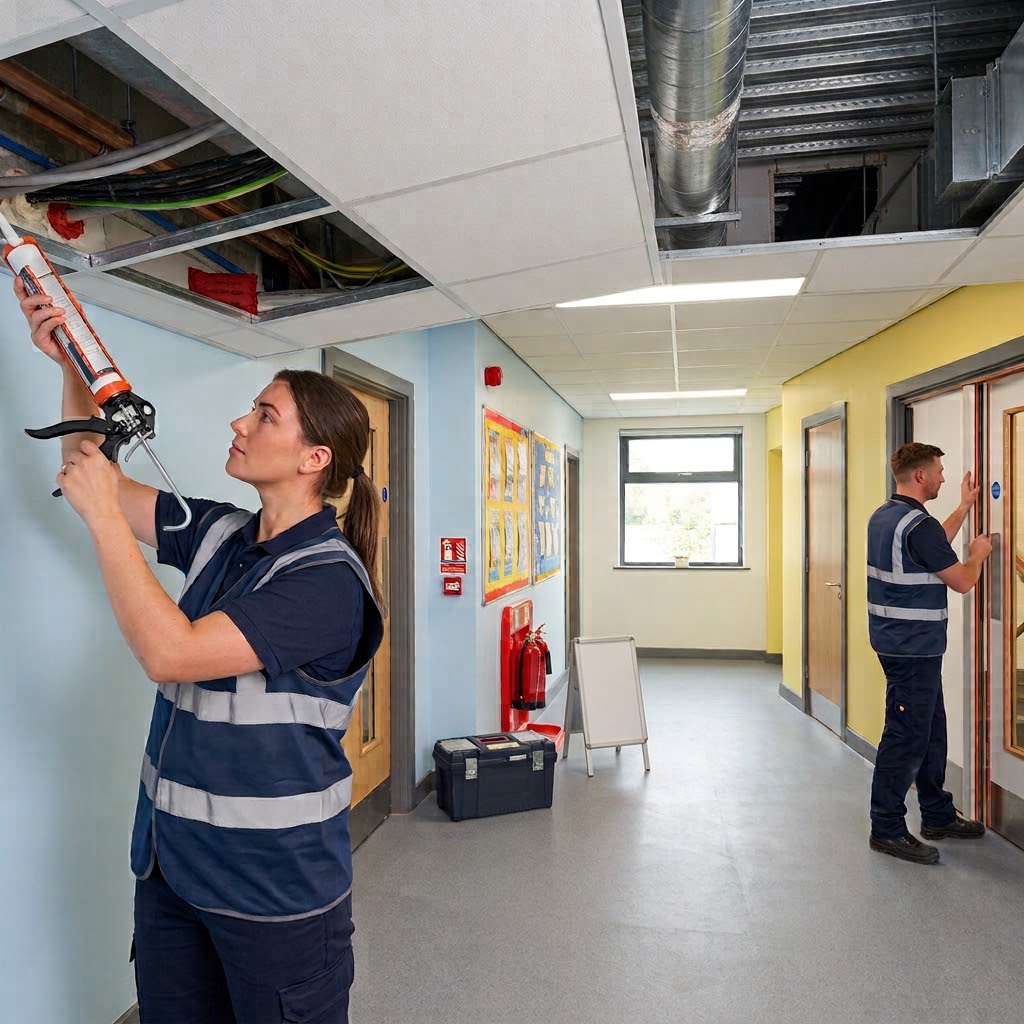
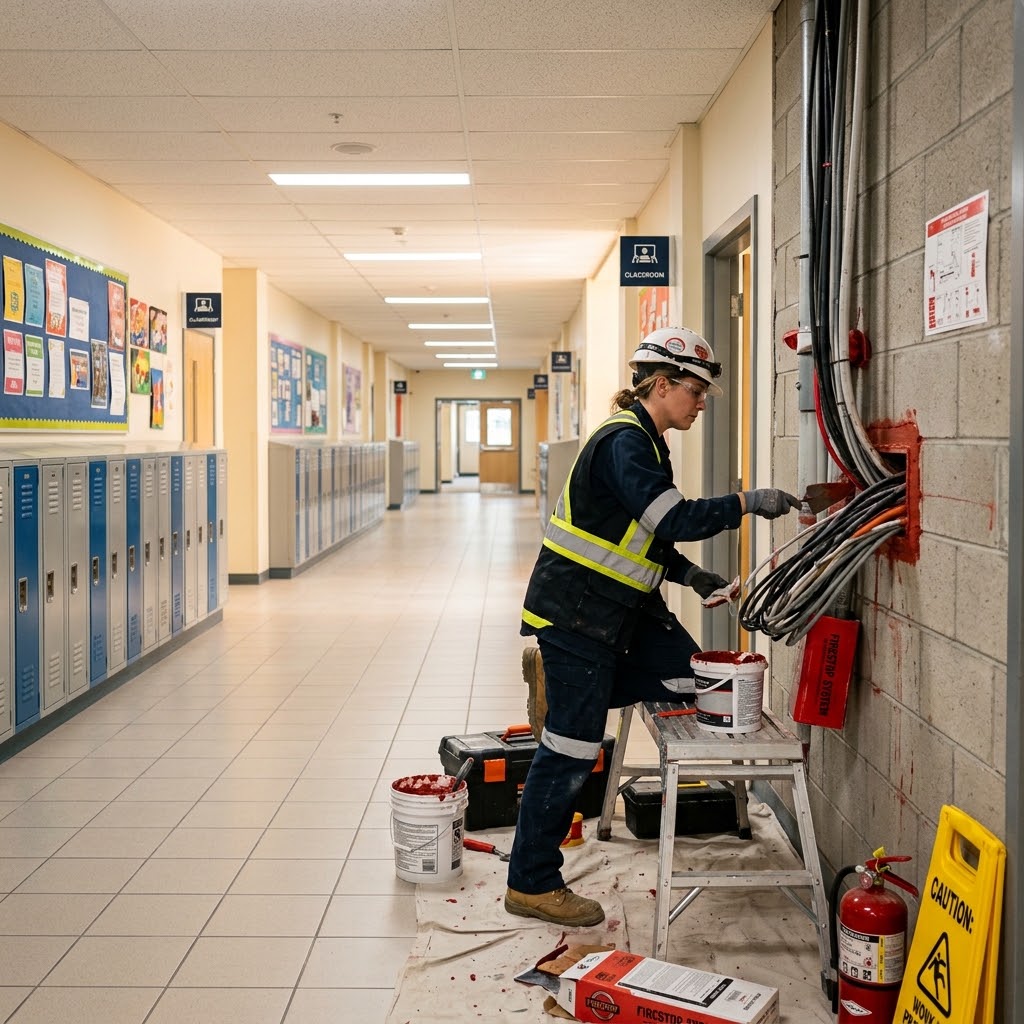
- Fire Stopping & Penetration Sealing: Fire-resisting boarding & compounds, intumescent sealants, and pillows protect pipe and cable penetrations.
- Cavity Barriers: Fire-resistant insulation installed inside concealed wall and ceiling voids stops concealed flame spread.
- Fire Doors: Rated door assemblies isolate corridors, classrooms, plant rooms and compartments.
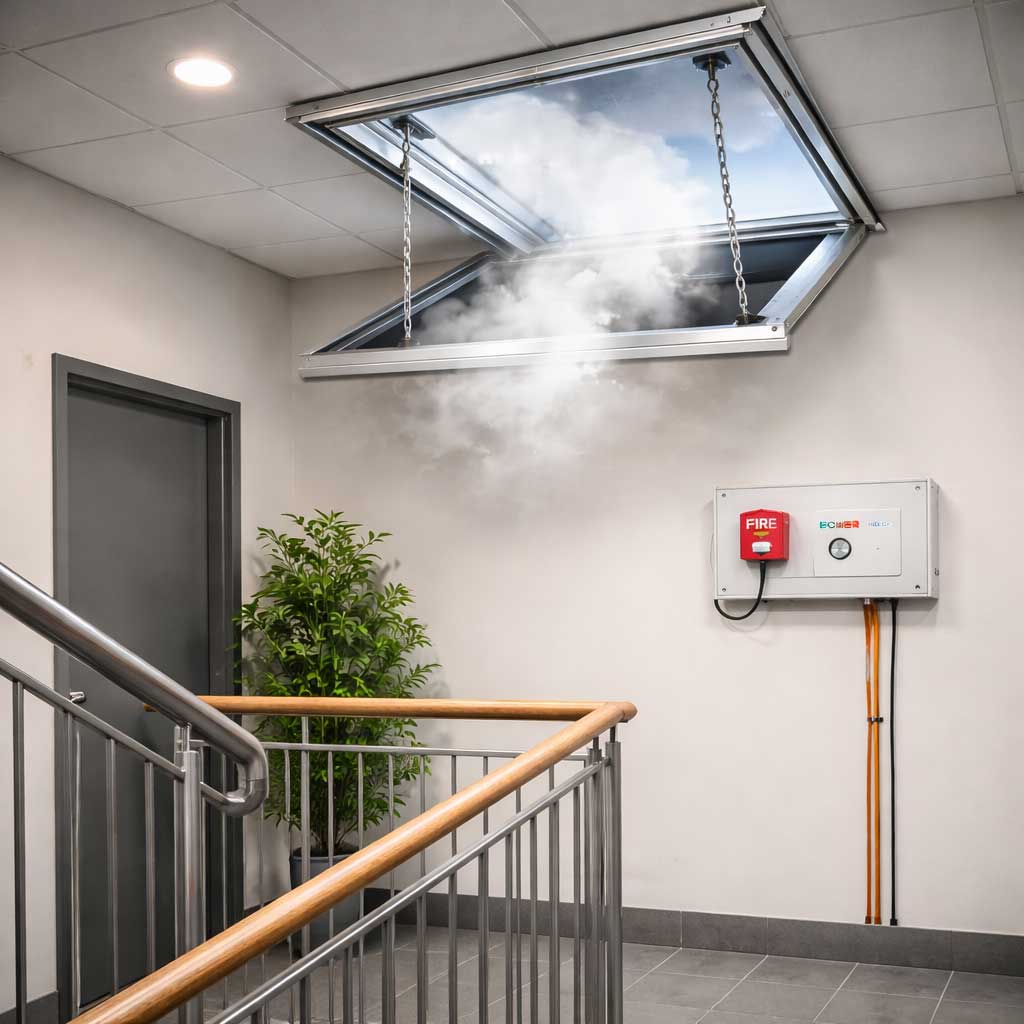
- Fire Dampers: Passive Fire dampers within HVAC ductwork prevent toxic smoke migration across compartment walls.
- Motorised Smoke Dampers: Active smoke dampers are activated by a wider interconnected fire alert system.
Modern Upgrade vs Legacy Passive Fire Systems
Educational facilities frequently update electrical wiring, Wi-Fi networks, and plumbing systems. Consequently, contractors often breach existing fire walls without restoring essential fire resistance. Moreover, legacy installations may rely on outdated materials that no longer meet current UK fire codes.
For example, uncertified polyurethane foam offers zero fire resistance during a real fire event. By contrast, modern certified fire stopping systems deliver tested, verifiable compartmentation for educational buildings.
Key Passive Fire System Comparison for Schools
To protect school infrastructure and ensure the safety of occupants, strong passive fire protection is needed to limit smoke and flames within the designated compartments. While active suppression is a key component, the building’s structure is designed with passive measures to slow the spread of fire and provide students and staff with precious time to evacuate. Depending on the location and mechanism, systems provide different architectural functions.
Penetration firestops seal cable and pipe openings in ceilings in spaces such as computer laboratories, plant rooms, corridors, and individual compartments; cavity barriers block concealed wall and roof voids in spaces such as modular classrooms, facade cavities, loft spaces, and header walls; and fire doors limit the movement of flames from room to room in high-occupancy spaces such as classrooms, stairwells, and assembly halls. These systems together provide a focused containment approach to the structural requirements of educational buildings.
| System Type | Primary Function | Ideal School Application |
|---|---|---|
|
Penetration Firestop |
Seals cable and pipe ceiling openings |
Computer labs, corridors, plant rooms & individual compartments |
|
Cavity Barriers |
Blocks concealed wall and roof voids |
Modular classrooms, facade cavities, loft space and header walls |
|
Fire Doors |
Restricts room-to-room flame movement |
Classrooms, stairwells, assembly halls and compartments |
Modern Upgrade vs Legacy Passive Fire Systems
Educational facilities frequently update electrical wiring, Wi-Fi networks, and plumbing systems. Consequently, contractors often breach existing fire walls without restoring essential fire resistance. Moreover, legacy installations may rely on outdated materials that no longer meet current UK fire codes.
For example, uncertified polyurethane foam offers zero fire resistance during a real fire event. By contrast, modern certified fire stopping systems deliver tested, verifiable compartmentation for educational buildings.

Why Meritas Delivers the Best Passive Fire Protection for Schools
All Meritas work comes with our Beyond Compliance promise. Specifically, this offers a peace of mind guarantee that all work will be completed well beyond the minimum compliance requirements for every project. As a result, headteachers, school governors and trusts gain complete confidence regarding student and teacher safety.
Furthermore, our certified engineers perform comprehensive fire compartmentation surveys before installation. Because safety requires complete transparency, we provide digital and photographic evidence for every fire seal.
Meritas Project Performance Benchmarks
The data from our internal audits demonstrates the true impact of proactive passive fire upgrades in schools across the UK:
- 92.8% of projects finished early: Fully documented third-party accredited installations in primary and secondary academies on time or ahead of schedule.
- Collaborative Approach: Meritas has strong relationships with 3rd party manufacturers and consultants to ensure smooth project delivery
- No Operational Disruption: Out-of-hours installation schedules tailored to school term times.
Working with specialist fire protection experts therefore means less short-term disruption and lower maintenance costs over the longer term.
Outside Guidance and Regulatory Standards
School administrators must follow strict legislative requirements for structural fire safety. For example, the GOV.UK Fire Safety in Educational Premises document describes necessary risk assessment actions. Modern educational facilities should also meet the requirements of the revised Building Regulations Approved Document B and the Regulatory Reform (Fire Safety) Order 2005 (RRFSO).
To explore how our team implements these standards, visit our Passive Fire Protection Services page.
Frequently Asked Questions About School Fire Protection
What is the best passive fire protection for schools with limited budgets?
How often must school fire doors and cavity barriers be checked?
Can passive fire protection installation be done during school holidays?
What regulations govern the best passive fire protection for schools in the UK?
Contact Meritas &
Speak to an Expert
Honest advice and elite protection form the foundation of everything we do at Meritas. We identify and fix vulnerabilities through active & passive fire protection.
Reach out today for transparent guidance and the security your building deserves.
Tel: 01621 770834
About Meritas Fire Protection
Meritas is a company registered in England and Wales with company number 10288456. Meritas is a full service passive fire protection company, operating throughout the UK. The company’s technical team has experience in the installation of certified fire doors, fire compartmentation, and annual fire damper testing, remediation and installation. Meritas supports local authorities with rigorous compliance audits that protect communities and build long-term structural resilience. This top-tier provider is motivated to go above and beyond, ensuring that all work completed is Beyond Compliance.